
Carpet Stain Removal Beaverton OR
Tracked-in winter mud, coffee, Willamette Valley pinot, bike grease, crayon — stain treatment matched to the chemistry of the spill and the fiber it landed on.
Beaverton, OR and Portland's west side · Calls may be recorded for quality and training purposes.
Every market has its stain lineup, and Beaverton's is written by the weather. The calls we get in Beaverton, OR are tracked-in winter mud up the hall and down the stairs, coffee — this is greater Portland, coffee is a food group — red wine from a Willamette Valley bottle, bike chain grease from the garage commuter, crayon and marker from the kids' long indoor season, and the eternal mystery spot nobody claims. Each of those is a different chemistry problem — and chemistry, not muscle, is what removes stains. The product that dissolves a grease mark will set a protein spill; the oxidizer that lifts one stain strips the dye around another. Matching treatment to stain and fiber is the entire discipline.
The other half of the discipline is depth. Spills do not stay on the surface — they soak to the backing and pad, which is why home-treated spots so often reappear a few days later as the residue wicks back up. Slow wet-season drying gives that wicking extra time to work, which is why the reappearing spot is practically a Beaverton winter tradition. Professional spotting treats and extracts the full column of the spill, top to pad, so what is gone stays gone.
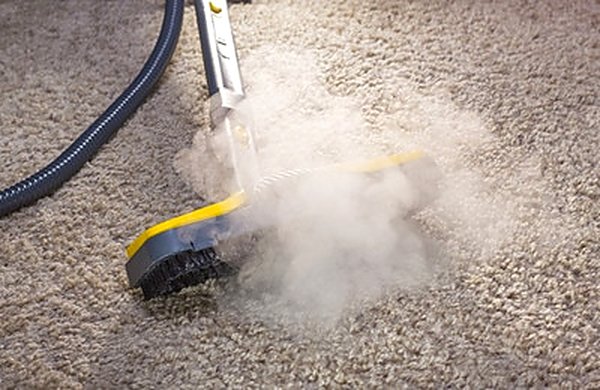
The Beaverton stain lineup, by chemistry
| What landed | What it is | What works |
|---|---|---|
| Tracked-in mud, wet-season grit | Clay and organic silt | Dry fully, vacuum bulk, then pre-spray, agitation, and extraction |
| Coffee, tea, red wine | Tannins | Acid-side tannin treatment and rinse-extraction |
| Juice, popsicles, sports drinks | Synthetic food dye | Reducing agents, applied gradually; the most technique-dependent family |
| Blood, milk, vomit | Proteins | Enzyme digestion with cool water — heat cooks protein in permanently |
| Bike grease, cooking oil, makeup, lotion | Oils | Solvent pre-treatment, then detergent and rinse |
| Gum, candle wax, sticker glue, crayon | Sticky polymers | Solvent dissolve or freeze-and-shatter, then residue extraction |
| Rust rings from furniture feet | Iron oxide | Dedicated rust chemistry — general cleaners make rust spread |
One local footnote on that last row: in a climate this damp, a metal furniture foot on carpet that stayed wet too long is the classic rust-ring origin story. It is also one more argument for extraction that actually removes the water.
First aid that helps (and the kind that doesn't)
- Do: blot straight down with plain white paper towels until nothing transfers. Weight a dry stack on wet spills and walk away.
- Do: let mud dry completely before touching it — then vacuum. Wet mud smears; dry mud lifts.
- Do: scrape solids off with a spoon before they cure — wax, gum, and play dough especially.
- Don't: scrub. The stain may lift; the fuzzy, blown-out fiber patch is forever.
- Don't: reach for "oxy" sprays on an unknown spot — on the wrong dye they trade a removable stain for a permanent pale one.
- Don't: apply heat (iron tricks, hair dryers, hot water) until you know the stain family; heat sets proteins and many dyes.
The honest categories
At the walk-through, every spot gets one of three calls: comes out (most fresh and untreated stains), improves substantially (old stains and anything already worked over with store products), or is not a stain — bleach marks, sun fade, and chemical burns are missing dye, and their fixes are spot-dyeing or patching, not cleaning. You hear the call before you spend the money.
Frequently Asked Questions
Winter mud is ground into the hallway carpet. Does that come out?
A stain I cleaned keeps reappearing in the same spot. Why?
Can you get red wine out of carpet?
What about the mystery black spots that appear near the door every winter?
Are bleach spots cleanable?
Do you charge per spot?
Got a spot that won't quit in Beaverton?
Call (503) 479-4076 and describe it — you'll get an honest read on whether it comes out, and the price, before anyone drives over.